Aesop's Fables · Aesop
Introduction
_Æsop embodies an epigram not uncommon in human history; his fame is all the more deserved because he never deserved it. The firm foundations of common sense, the shrewd shots at uncommon sense, that characterise all the Fables, belong not him but to humanity. In the earliest human history whatever is authentic is universal: and whatever is universal is anonymous. In such cases there is always some central man who had first the trouble of collecting them, and afterwards the fame of creating them. He had the fame; and, on the whole, he earned the fame. There must have been something great and human, something of the human future and the human past, in such a man: even if he only used it to rob the past or deceive the future. The story of Arthur may have been really connected with the most fighting Christianity of falling Rome or with the most heathen traditions hidden in the hills of Wales. But the word "Mappe" or "Malory" will always mean King Arthur; even though we find older and better origins than the Mabinogian; or write later and worse versions than the "Idylls of the King." The nursery fairy tales may have come out of Asia with the Indo-European race, now fortunately extinct; they may have been invented by some fine French lady or gentleman like Perrault: they may possibly even be what they profess to be. But we shall always call the best selection of such tales "Grimm's Tales": simply because it is the best collection.
The historical Æsop, in so far as he was historical, would seem to have been a Phrygian slave, or at least one not to be specially and symbolically adorned with the Phrygian cap of liberty. He lived, if he did live, about the sixth century before Christ, in the time of that Croesus whose story we love and suspect like everything else in Herodotus. There are also stories of deformity of feature and a ready ribaldry of tongue: stories which (as the celebrated Cardinal said) explain, though they do not excuse, his having been hurled over a high precipice at Delphi. It is for those who read the Fables to judge whether he was really thrown over the cliff for being ugly and offensive, or rather for being highly moral and correct. But there is no kind of doubt that the general legend of him may justly rank him with a race too easily forgotten in our modern comparisons: the race of the great philosophic slaves. Æsop may have been a fiction like Uncle Remus: he was also, like Uncle Remus, a fact. It is a fact that slaves in the old world could be worshipped like Æsop, or loved like Uncle Remus. It is odd to note that both the great slaves told their best stories about beasts and birds.
But whatever be fairly due to Æsop, the human tradition called Fables is not due to him. This had gone on long before any sarcastic freedman from Phrygia had or had not been flung off a precipice; this has remained long after. It is to our advantage, indeed, to realise the distinction; because it makes Æsop more obviously effective than any other fabulist. Grimm's Tales, glorious as they are, were collected by two German students. And if we find it hard to be certain of a German student, at least we know more about him than We know about a Phrygian slave. The truth is, of course, that Æsop's Fables are not Æsop's fables, any more than Grimm's Fairy Tales were ever Grimm's fairy tales. But the fable and the fairy tale are things utterly distinct. There are many elements of difference; but the plainest is plain enough. There can be no good fable with human beings in it. There can be no good fairy tale without them.
Æsop, or Babrius (or whatever his name was), understood that, for a fable, all the persons must be impersonal. They must be like abstractions in algebra, or like pieces in chess. The lion must always be stronger than the wolf, just as four is always double of two. The fox in a fable must move crooked, as the knight in chess must move crooked. The sheep in a fable must march on, as the pawn in chess must march on. The fable must not allow for the crooked captures of the pawn; it must not allow for what Balzac called "the revolt of a sheep" The fairy tale, on the other hand, absolutely revolves on the pivot of human personality. If no hero were there to fight the dragons, we should not even know that they were dragons. If no adventurer were cast on the undiscovered island--it would remain undiscovered. If the miller's third son does not find the enchanted garden where the seven princesses stand white and frozen--why, then, they will remain white and frozen and enchanted. If there is no personal prince to find the Sleeping Beauty she will simply sleep. Fables repose upon quite the opposite idea; that everything is itself, and will in any case speak for itself. The wolf will be always wolfish; the fox will be always foxy. Something of the same sort may have been meant by the animal worship, in which Egyptian and Indian and many other great peoples have combined. Men do not, I think, love beetles or cats or crocodiles with a wholly personal love; they salute them as expressions of that abstract and anonymous energy in nature which to any one is awful, and to an atheist must be frightful. So in all the fables that are or are not Æsop's all the animal forces drive like inanimate forces, like great rivers or growing trees. It is the limit and the loss of all such things that they cannot be anything but themselves: it is their tragedy that they could not lose their souls.
This is the immortal justification of the Fable: that we could not teach the plainest truths so simply without turning men into chessmen. We cannot talk of such simple things without using animals that do not talk at all. Suppose, for a moment, that you turn the wolf into a wolfish baron, or the fox into a foxy diplomatist. You will at once remember that even barons are human, you will be unable to forget that even diplomatists are men. You will always be looking for that accidental good-humour that should go with the brutality of any brutal man; for that allowance for all delicate things, including virtue, that should exist in any good diplomatist. Once put a thing on two legs instead of four and pluck it of feathers and you cannot help asking for a human being, either heroic, as in the fairy tales, or un-heroic, as in the modern novels.
But by using animals in this austere and arbitrary style as they are used on the shields of heraldry or the hieroglyphics of the ancients, men have really succeeded in handing down those tremendous truths that are called truisms. If the chivalric lion be red and rampant, it is rigidly red and rampant; if the sacred ibis stands anywhere on one leg, it stands on one leg for ever. In this language, like a large animal alphabet, are written some of the first philosophic certainties of men. As the child learns A for Ass or B for Bull or C for Cow, so man has learnt here to connect the simpler and stronger creatures with the simpler and stronger truths. That a flowing stream cannot befoul its own fountain, and that any one who says it does is a tyrant and a liar; that a mouse is too weak to fight a lion, but too strong for the cords that can hold a lion; that a fox who gets most out of a flat dish may easily get least out of a deep dish; that the crow whom the gods forbid to sing, the gods nevertheless provide with cheese; that when the goat insults from a mountain-top it is not the goat that insults, but the mountain: all these are deep truths deeply graven on the rocks wherever men have passed. It matters nothing how old they are, or how new; they are the alphabet of humanity, which like so many forms of primitive picture-writing employs any living symbol in preference to man. These ancient and universal tales are all of animals; as the latest discoveries in the oldest pre-historic caverns are all of animals. Man, in his simpler states, always felt that he himself was something too mysterious to be drawn. But the legend he carved under these cruder symbols was everywhere the same; and whether fables began with Æsop or began with Adam, whether they were German and mediæval as Reynard the Fox, or as French and Renaissance as La Fontaine, the upshot is everywhere essentially the same: that superiority is always insolent, because it is always accidental; that pride goes before a fall; and that there is such a thing as being too clever by half. You will not find any other legend but this written upon the rocks by any hand of man. There is every type and time of fable: but there is only one moral to the fable; because there is only one moral to everything_.
G. K. CHESTERTON
CONTENTS
THE FOX AND THE GRAPES
THE GOOSE THAT LAID THE GOLDEN EGGS
THE CAT AND THE MICE
THE MISCHIEVOUS DOG
THE CHARCOAL-BURNER AND THE FULLER
THE MICE IN COUNCIL
THE BAT AND THE WEASELS
THE DOG AND THE SOW
THE FOX AND THE CROW
THE HORSE AND THE GROOM
THE WOLF AND THE LAMB
THE PEACOCK AND THE CRANE
THE CAT AND THE BIRDS
THE SPENDTHRIFT AND THE SWALLOW
THE OLD WOMAN AND THE DOCTOR
THE MOON AND HER MOTHER
MERCURY AND THE WOODMAN
THE ASS, THE FOX, AND THE LION
THE LION AND THE MOUSE
THE CROW AND THE PITCHER
THE BOYS AND THE FROGS
THE NORTH WIND AND THE SUN
THE MISTRESS AND HER SERVANTS
THE GOODS AND THE ILLS
THE HARES AND THE FROGS
THE FOX AND THE STORK
THE WOLF IN SHEEP'S CLOTHING
THE STAG IN THE OX-STALL
THE MILKMAID AND HER PAIL
THE DOLPHINS, THE WHALES, AND THE SPRAT
THE FOX AND THE MONKEY
THE ASS AND THE LAP-DOG
THE FIR-TREE AND THE BRAMBLE
THE FROGS' COMPLAINT AGAINST THE SUN
THE DOG, THE COCK, AND THE FOX
THE GNAT AND THE BULL
THE BEAR AND THE TRAVELLERS
THE SLAVE AND THE LION
THE FLEA AND THE MAN
THE BEE AND JUPITER
THE OAK AND THE REEDS
THE BLIND MAN AND THE CUB
THE BOY AND THE SNAILS
THE APES AND THE TWO TRAVELLERS
THE ASS AND HIS BURDENS
THE SHEPHERD'S BOY AND THE WOLF
THE FOX AND THE GOAT
THE FISHERMAN AND THE SPRAT
THE BOASTING TRAVELLER
THE CRAB AND HIS MOTHER
THE ASS AND HIS SHADOW
THE FARMER AND HIS SONS
THE DOG AND THE COOK
THE MONKEY AS KING
THE THIEVES AND THE COCK
THE FARMER AND FORTUNE
JUPITER AND THE MONKEY
FATHER AND SONS
THE LAMP
THE OWL AND THE BIRDS
THE ASS IN THE LION'S SKIN
THE SHE-GOATS AND THEIR BEARDS
THE OLD LION
THE BOY BATHING
THE QUACK FROG
THE SWOLLEN FOX
THE MOUSE, THE FROG, AND THE HAWK
THE BOY AND THE NETTLES
THE PEASANT AND THE APPLE-TREE
THE JACKDAW AND THE PIGEONS
JUPITER AND THE TORTOISE
THE DOG IN THE MANGER
THE TWO BAGS
THE OXEN AND THE AXLETREES
THE BOY AND THE FILBERTS
THE FROGS ASKING FOR A KING
THE OLIVE-TREE AND THE FIG-TREE
THE LION AND THE BOAR
THE WALNUT-TREE
THE MAN AND THE LION
THE TORTOISE AND THE EAGLE
THE KID ON THE HOUSETOP
THE FOX WITHOUT A TAIL
THE VAIN JACKDAW
THE TRAVELLER AND HIS DOG
THE SHIPWRECKED MAN AND THE SEA
THE WILD BOAR AND THE FOX
MERCURY AND THE SCULPTOR
THE FAWN AND HIS MOTHER
THE FOX AND THE LION
THE EAGLE AND HIS CAPTOR
THE BLACKSMITH AND HIS DOG
THE STAG AT THE POOL
THE DOG AND THE SHADOW
MERCURY AND THE TRADESMEN
THE MICE AND THE WEASELS
THE PEACOCK AND JUNO
THE BEAR AND THE FOX
THE ASS AND THE OLD PEASANT
THE OX AND THE FROG
THE MAN AND THE IMAGE
HERCULES AND THE WAGGONER
THE POMEGRANATE, THE APPLE-TREE, AND THE BRAMBLE
THE LION, THE BEAR, AND THE FOX
THE BLACKAMOOR
THE TWO SOLDIERS AND THE ROBBER
THE LION AND THE WILD ASS
THE MAN AND THE SATYR
THE IMAGE-SELLER
THE EAGLE AND THE ARROW
THE RICH MAN AND THE TANNER
THE WOLF, THE MOTHER, AND HER CHILD
THE OLD WOMAN AND THE WINE-JAR
THE LIONESS AND THE VIXEN
THE VIPER AND THE FILE
THE CAT AND THE COCK
THE HARE AND THE TORTOISE
THE SOLDIER AND HIS HORSE
THE OXEN AND THE BUTCHERS
THE WOLF AND THE LION
THE SHEEP, THE WOLF, AND THE STAG
THE LION AND THE THREE BULLS
THE HORSE AND HIS RIDER
THE GOAT AND THE VINE
THE TWO POTS
THE OLD HOUND
THE CLOWN AND THE COUNTRYMAN
THE LARK AND THE FARMER
THE LION AND THE ASS
THE PROPHET
THE HOUND AND THE HARE
THE LION, THE MOUSE, AND THE FOX
THE TRUMPETER TAKEN PRISONER
THE WOLF AND THE CRANE
THE EAGLE, THE CAT, AND THE WILD SOW
THE WOLF AND THE SHEEP
THE TUNNY-FISH AND THE DOLPHIN
THE THREE TRADESMEN
THE MOUSE AND THE BULL
THE HARE AND THE HOUND
THE TOWN MOUSE AND THE COUNTRY MOUSE
THE LION AND THE BULL
THE WOLF, THE FOX, AND THE APE
THE EAGLE AND THE COCKS
THE ESCAPED JACKDAW
THE FARMER AND THE FOX
VENUS AND THE CAT
THE CROW AND THE SWAN
THE STAG WITH ONE EYE
THE FLY AND THE DRAUGHT-MULE
THE COCK AND THE JEWEL
THE WOLF AND THE SHEPHERD
THE FARMER AND THE STORK
THE CHARGER AND THE MILLER
THE GRASSHOPPER AND THE OWL
THE GRASSHOPPER AND THE ANTS
THE FARMER AND THE VIPER
THE TWO FROGS
THE COBBLER TURNED DOCTOR
THE ASS, THE COCK, AND THE LION
THE BELLY AND THE MEMBERS
THE BALD MAN AND THE FLY
THE ASS AND THE WOLF
THE MONKEY AND THE CAMEL
THE SICK MAN AND THE DOCTOR
THE TRAVELLERS AND THE PLANE-TREE
THE FLEA AND THE OX
THE BIRDS, THE BEASTS, AND THE BAT
THE MAN AND HIS TWO SWEETHEARTS
THE EAGLE, THE JACKDAW, AND THE SHEPHERD
THE WOLF AND THE BOY
THE MILLER, HIS SON, AND THEIR ASS
THE STAG AND THE VINE
THE LAMB CHASED BY A WOLF
THE ARCHER AND THE LION
THE WOLF AND THE GOAT
THE SICK STAG
THE ASS AND THE MULE
BROTHER AND SISTER
THE HEIFER AND THE OX
THE KINGDOM OF THE LION
THE ASS AND HIS DRIVER
THE LION AND THE HARE
THE WOLVES AND THE DOGS
THE BULL AND THE CALF
THE TREES AND THE AXE
THE ASTRONOMER
THE LABOURER AND THE SNAKE
THE CAGE-BIRD AND THE BAT
THE ASS AND HIS PURCHASER
THE KID AND THE WOLF
THE DEBTOR AND HIS SOW
THE BALD HUNTSMAN
THE HERDSMAN AND THE LOST BULL
THE MULE
THE HOUND AND THE FOX
THE FATHER AND HIS DAUGHTERS
THE THIEF AND THE INNKEEPER
THE PACK-ASS AND THE WILD ASS
THE ASS AND HIS MASTERS
THE PACK-ASS, THE WILD ASS, AND THE LION
THE ANT
THE FROGS AND THE WELL
THE CRAB AND THE FOX
THE FOX AND THE GRASSHOPPER
THE FARMER, HIS BOY, AND THE ROOKS
THE ASS AND THE DOG
THE ASS CARRYING THE IMAGE
THE ATHENIAN AND THE THEBAN
THE GOATHERD AND THE GOAT
THE SHEEP AND THE DOG
THE SHEPHERD AND THE WOLF
THE LION, JUPITER, AND THE ELEPHANT
THE PIG AND THE SHEEP
THE GARDENER AND HIS DOG
THE RIVERS AND THE SEA
THE LION IN LOVE
THE BEE-KEEPER
THE WOLF AND THE HORSE
THE BAT, THE BRAMBLE, AND THE SEAGULL
THE DOG AND THE WOLF
THE WASP AND THE SNAKE
THE EAGLE AND THE BEETLE
THE FOWLER AND THE LARK
THE FISHERMAN PIPING
THE WEASEL AND THE MAN
THE PLOUGHMAN, THE ASS, AND THE OX
DEMADES AND HIS FABLE
THE MONKEY AND THE DOLPHIN
THE CROW AND THE SNAKE
THE DOGS AND THE FOX
THE NIGHTINGALE AND THE HAWK
THE ROSE AND THE AMARANTH
THE MAN, THE HORSE, THE OX, AND THE DOG
THE WOLVES, THE SHEEP, AND THE RAM
THE SWAN
THE SNAKE AND JUPITER
THE WOLF AND HIS SHADOW
THE PLOUGHMAN AND THE WOLF
MERCURY AND THE MAN BITTEN BY AN ANT
THE WILY LION
THE PARROT AND THE CAT
THE STAG AND THE LION
THE IMPOSTOR
THE DOGS AND THE HIDES
THE LION, THE FOX, AND THE ASS
THE FOWLER, THE PARTRIDGE, AND THE COCK
THE GNAT AND THE LION
THE FARMER AND HIS DOGS
THE EAGLE AND THE FOX
THE BUTCHER AND HIS CUSTOMERS
HERCULES AND MINERVA
THE FOX WHO SERVED A LION
THE QUACK DOCTOR
THE LION, THE WOLF, AND THE FOX
HERCULES AND PLUTUS
THE FOX AND THE LEOPARD
THE FOX AND THE HEDGEHOG
THE CROW AND THE RAVEN
THE WITCH
THE OLD MAN AND DEATH
THE MISER
THE FOXES AND THE RIVER
THE HORSE AND THE STAG
THE FOX AND THE BRAMBLE
THE FOX AND THE SNAKE
THE LION, THE FOX, AND THE STAG
THE MAN WHO LOST HIS SPADE
THE PARTRIDGE AND THE FOWLER
THE RUNAWAY SLAVE
THE HUNTER AND THE WOODMAN
THE SERPENT AND THE EAGLE
THE ROGUE AND THE ORACLE
THE HORSE AND THE ASS
THE DOG CHASING A WOLF
GRIEF AND HIS DUE
THE HAWK, THE KITE, AND THE PIGEONS
THE WOMAN AND THE FARMER
PROMETHEUS AND THE MAKING OF MAN
THE SWALLOW AND THE CROW
THE HUNTER AND THE HORSEMAN
THE GOATHERD AND THE WILD GOATS
THE NIGHTINGALE AND THE SWALLOW
THE TRAVELLER AND FORTUNE
LIST OF ILLUSTRATIONS
=IN COLOUR=
THE HARE AND THE TORTOISE
THE MOON AND HER MOTHER
THE FIR-TREE AND THE BRAMBLE
THE CRAB AND HIS MOTHER
THE QUACK FROG
THE SHIPWRECKED MAN AND THE SEA
THE BLACKAMOOR
THE TWO POTS
VENUS AND THE CAT
THE TRAVELLERS AND THE PLANE-TREE
THE TREES AND THE AXE
THE LION, JUPITER, AND THE ELEPHANT
THE GNAT AND THE LION
=IN BLACK AND WHITE=
THE FOX AND THE GRAPES
THE FOX AND THE CROW
THE CAT AND THE BIRDS
THE CROW AND THE PITCHER
THE NORTH WIND AND THE SUN
THE FOX AND THE STORK
THE GNAT AND THE BULL
THE FLEA AND THE MAN
THE OAK AND THE REEDS
THE THIEVES AND THE COCK
THE OWL AND THE BIRDS
THE ASS IN THE LION'S SKIN
THE BOY BATHING
THE DOG IN THE MANGER
THE FROGS ASKING FOR A KING
KING LOG
THE FOX WITHOUT A TAIL
THE FOX AND THE LION
THE DOG AND THE SHADOW
THE BEAR AND THE FOX
THE OX AND THE FROG
THE MAN AND THE SATYR
THE OLD WOMAN AND THE WINE-JAR
THE CAT AND THE COCK
THE SHEEP, THE WOLF, AND THE STAG
THE GOAT AND THE VINE
THE HOUND AND THE HARE
THE WOLF AND THE CRANE
THE TOWN MOUSE AND THE COUNTRY MOUSE
THE WOLF, THE FOX, AND THE APE
THE COCK AND THE JEWEL
THE GRASSHOPPER AND THE ANTS
THE BALD MAN AND THE FLY
THE MONKEY AND THE CAMEL
THE MILLER, HIS SON, AND THEIR ASS
THE WOLF AND THE GOAT
THE KINGDOM OF THE LION
THE KID AND THE WOLF
THE MULE
THE FROGS AND THE WELL
THE GOATHERD AND THE GOAT
THE WOLF AND THE HORSE
THE FISHERMAN PIPING
THE MONKEY AND THE DOLPHIN
THE WOLF AND HIS SHADOW
THE LION, THE FOX, AND THE ASS
THE GNAT AND THE LION
THE FOX AND THE LEOPARD
THE MISER
THE HUNTER AND THE WOODMAN
THE HORSE AND THE ASS
ÆSOP'S FABLES
THE FOX AND THE GRAPES
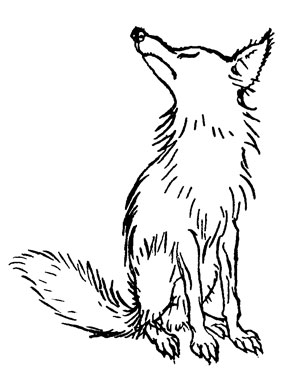
A hungry Fox saw some fine bunches of Grapes hanging from a vine that was trained along a high trellis, and did his best to reach them by jumping as high as he could into the air. But it was all in vain, for they were just out of reach: so he gave up trying, and walked away with an air of dignity and unconcern, remarking, "I thought those Grapes were ripe, but I see now they are quite sour."
THE GOOSE THAT LAID THE GOLDEN EGGS
A Man and his Wife had the good fortune to possess a Goose which laid a Golden Egg every day. Lucky though they were, they soon began to think they were not getting rich fast enough, and, imagining the bird must be made of gold inside, they decided to kill it in order to secure the whole store of precious metal at once. But when they cut it open they found it was just like any other goose. Thus, they neither got rich all at once, as they had hoped, nor enjoyed any longer the daily addition to their wealth.
Much wants more and loses all.
THE CAT AND THE MICE
There was once a house that was overrun with Mice. A Cat heard of this, and said to herself, "That's the place for me," and off she went and took up her quarters in the house, and caught the Mice one by one and ate them. At last the Mice could stand it no longer, and they determined to take to their holes and stay there. "That's awkward," said the Cat to herself: "the only thing to do is to coax them out by a trick." So she considered a while, and then climbed up the wall and let herself hang down by her hind legs from a peg, and pretended to be dead. By and by a Mouse peeped out and saw the Cat hanging there. "Aha!" it cried, "you're very clever, madam, no doubt: but you may turn yourself into a bag of meal hanging there, if you like, yet you won't catch us coming anywhere near you."
If you are wise you won't be deceived by the innocent airs of those whom you have once found to be dangerous.
THE MISCHIEVOUS DOG
There was once a Dog who used to snap at people and bite them without any provocation, and who was a great nuisance to every one who came to his master's house. So his master fastened a bell round his neck to warn people of his presence. The Dog was very proud of the bell, and strutted about tinkling it with immense satisfaction. But an old dog came up to him and said, "The fewer airs you give yourself the better, my friend. You don't think, do you, that your bell was given you as a reward of merit? On the contrary, it is a badge of disgrace."
Notoriety is often mistaken for fame.
THE CHARCOAL-BURNER AND THE FULLER
There was once a Charcoal-burner who lived and worked by himself. A Fuller, however, happened to come and settle in the same neighbourhood; and the Charcoal-burner, having made his acquaintance and finding he was an agreeable sort of fellow, asked him if he would come and share his house: "We shall get to know one another better that way," he said, "and, beside, our household expenses will be diminished." The Fuller thanked him, but replied, "I couldn't think of it, sir: why, everything I take such pains to whiten would be blackened in no time by your charcoal."
THE MICE IN COUNCIL
Once upon a time all the Mice met together in Council, and discussed the best means of securing themselves against the attacks of the cat. After several suggestions had been debated, a Mouse of some standing and experience got up and said, "I think I have hit upon a plan which will ensure our safety in the future, provided you approve and carry it out. It is that we should fasten a bell round the neck of our enemy the cat, which will by its tinkling warn us of her approach." This proposal was warmly applauded, and it had been already decided to adopt it, when an old Mouse got upon his feet and said, "I agree with you all that the plan before us is an admirable one: but may I ask who is going to bell the cat?"
THE BAT AND THE WEASELS
A Bat fell to the ground and was caught by a Weasel, and was just going to be killed and eaten when it begged to be let go. The Weasel said he couldn't do that because he was an enemy of all birds on principle. "Oh, but," said the Bat, "I'm not a bird at all: I'm a mouse." "So you are," said the Weasel, "now I come to look at you"; and he let it go. Some time after this the Bat was caught in just the same way by another Weasel, and, as before, begged for its life. "No," said the Weasel, "I never let a mouse go by any chance." "But I'm not a mouse," said the Bat; "I'm a bird." "Why, so you are," said the Weasel; and he too let the Bat go.
Look and see which way the wind blows before you commit yourself.
THE DOG AND THE SOW
A Dog and a Sow were arguing and each claimed that its own young ones were finer than those of any other animal. "Well," said the Sow at last, "mine can see, at any rate, when they come into the world: but yours are born blind."
THE FOX AND THE CROW
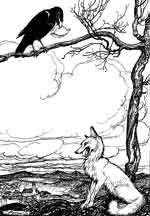
A Crow was sitting on a branch of a tree with a piece of cheese in her beak when a Fox observed her and set his wits to work to discover some way of getting the cheese. Coming and standing under the tree he looked up and said, "What a noble bird I see above me! Her beauty is without equal, the hue of her plumage exquisite. If only her voice is as sweet as her looks are fair, she ought without doubt to be Queen of the Birds." The Crow was hugely flattered by this, and just to show the Fox that she could sing she gave a loud caw. Down came the cheese, of course, and the Fox, snatching it up, said, "You have a voice, madam, I see: what you want is wits."
THE HORSE AND THE GROOM
There was once a Groom who used to spend long hours clipping and combing the Horse of which he had charge, but who daily stole a portion of his allowance of oats, and sold it for his own profit. The Horse gradually got into worse and worse condition, and at last cried to the Groom, "If you really want me to look sleek and well, you must comb me less and feed me more."
THE WOLF AND THE LAMB
A Wolf came upon a Lamb straying from the flock, and felt some compunction about taking the life of so helpless a creature without some plausible excuse; so he cast about for a grievance and said at last, "Last year, sirrah, you grossly insulted me." "That is impossible, sir," bleated the Lamb, "for I wasn't born then." "Well," retorted the Wolf, "you feed in my pastures." "That cannot be," replied the Lamb, "for I have never yet tasted grass." "You drink from my spring, then," continued the Wolf. "Indeed, sir," said the poor Lamb, "I have never yet drunk anything but my mother's milk." "Well, anyhow," said the Wolf, "I'm not going without my dinner": and he sprang upon the Lamb and devoured it without more ado.
THE PEACOCK AND THE CRANE
A Peacock taunted a Crane with the dullness of her plumage. "Look at my brilliant colours," said she, "and see how much finer they are than your poor feathers." "I am not denying," replied the Crane, "that yours are far gayer than mine; but when it comes to flying I can soar into the clouds, whereas you are confined to the earth like any dunghill cock."
THE CAT AND THE BIRDS
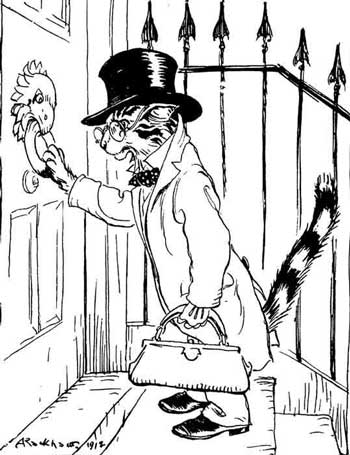
A Cat heard that the Birds in an aviary were ailing. So he got himself up as a doctor, and, taking with him a set of the instruments proper to his profession, presented himself at the door, and inquired after the health of the Birds. "We shall do very well," they replied, without letting him in, "when we've seen the last of you."
A villain may disguise himself, but he will not deceive the wise.
THE SPENDTHRIFT AND THE SWALLOW
A Spendthrift, who had wasted his fortune, and had nothing left but the clothes in which he stood, saw a Swallow one fine day in early spring. Thinking that summer had come, and that he could now do without his coat, he went and sold it for what it would fetch. A change, however, took place in the weather, and there came a sharp frost which killed the unfortunate Swallow. When the Spendthrift saw its dead body he cried, "Miserable bird! Thanks to you I am perishing of cold myself."
One swallow does not make summer.
Public domain. Source text via Project Gutenberg, PG boilerplate removed. View the source edition